31st blog – date: March, 4th 2026
Next blog ⇒
Why „AustroBay,“ many of you are probably wondering…
Well, I’ve bought my own T2a.
Does that mean I have to start a new website called AustroBay? 😉
After all, I invented the name „AustroSplit“ for this classic car blog because it’s a T1 (often called a „Split Bus“ in English) that is now located in Austria. And „Bay“ is also the English abbreviation for a „bay window“ bus – i.e., the T2.
So AustroBay would be the logical conclusion.
But no – enough of the hype, we’ll continue as usual with AustroSplit. 🙂
In early December 2025, about a month after our T1 finally received its individual approval, an ad for a T2 went online.
After clicking through all the sales platforms in the early evening, as so often happens – and actually being done with it – a friend sent me a link to a bus I had overlooked.
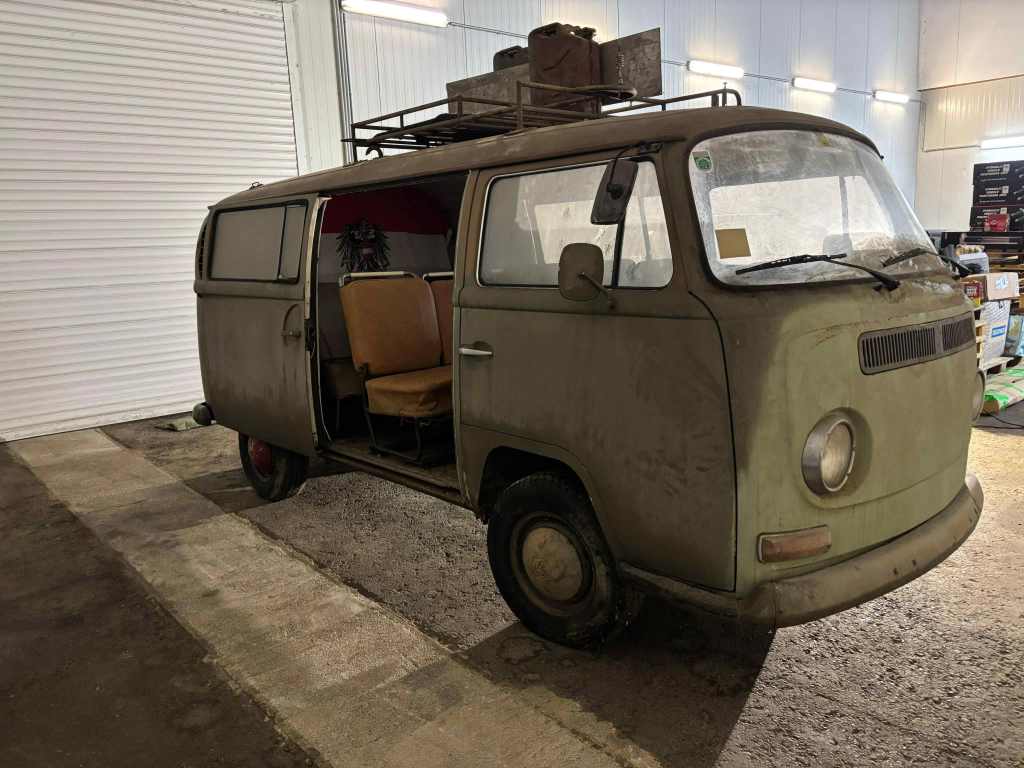
It was a 1969 VW T2a from the Austrian Armed Forces („Bundesheer“).
The ad had only recently gone online, so I had to act fast. Therefore, I contacted the seller and soon arranged a viewing appointment.
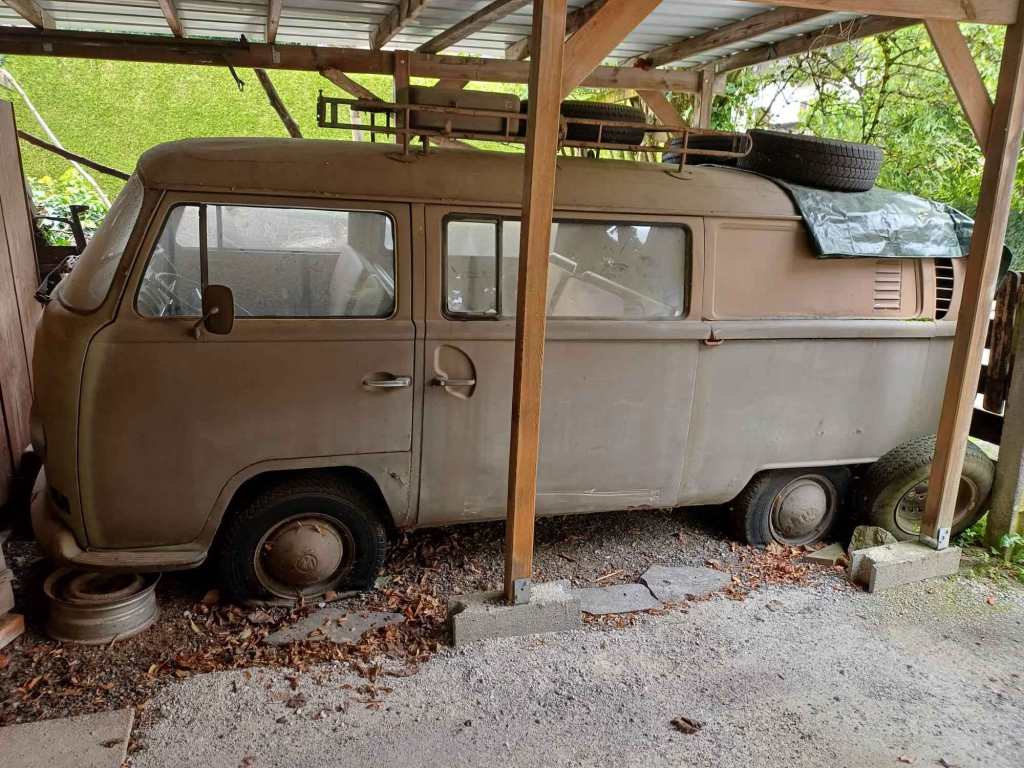
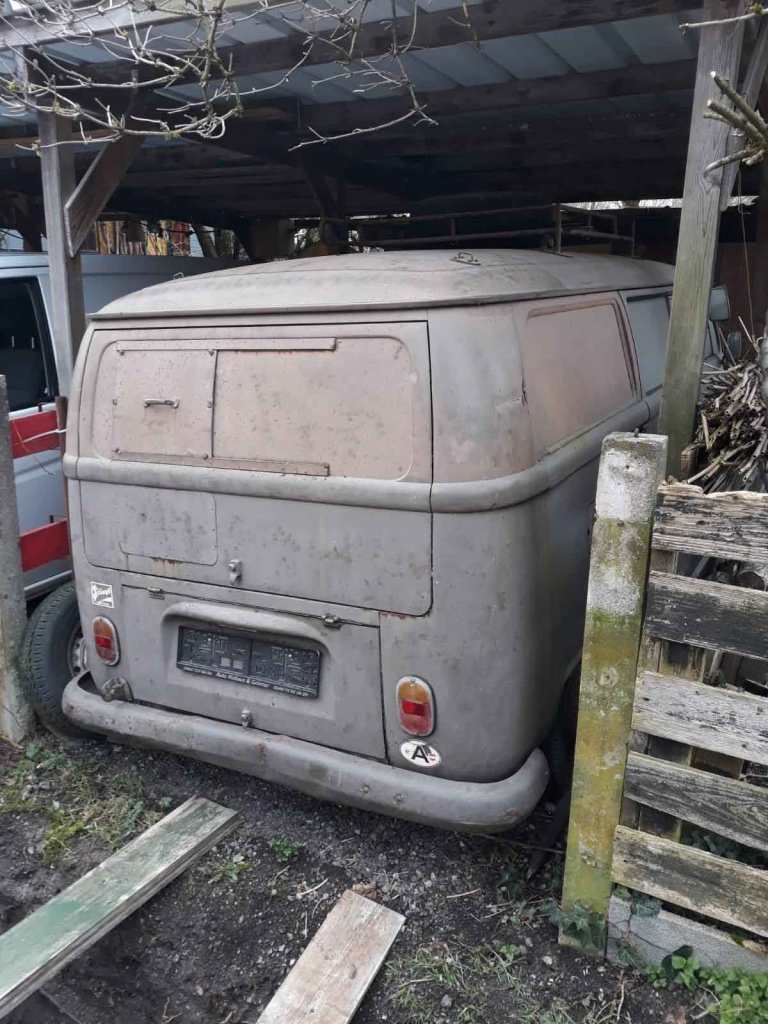
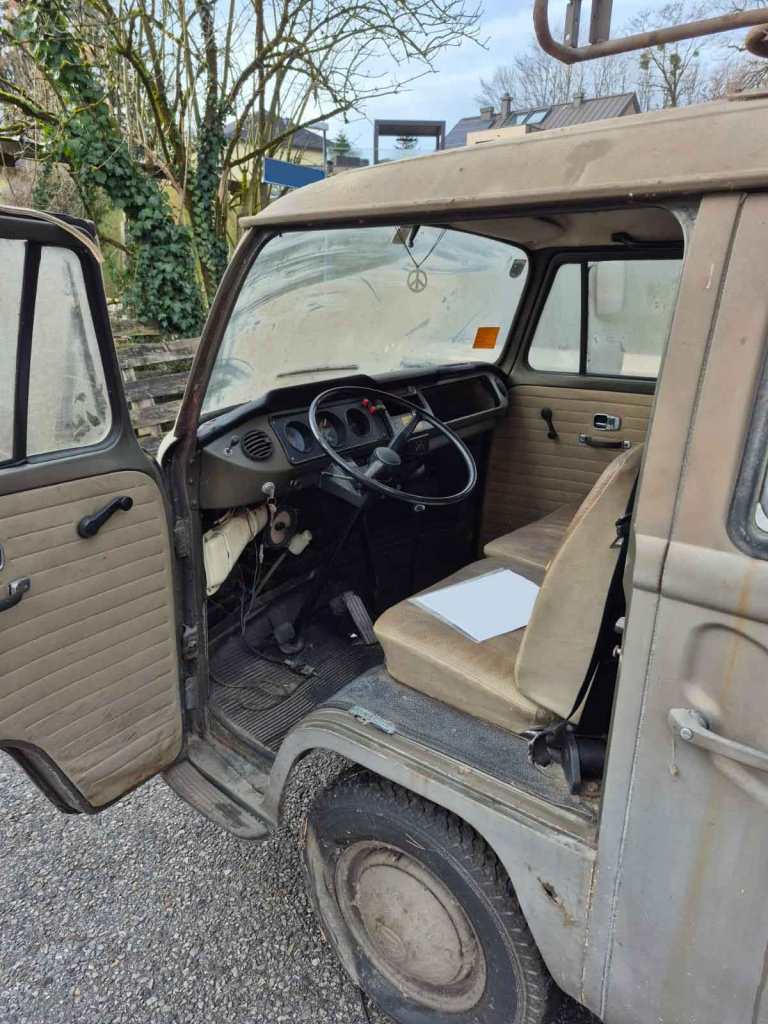
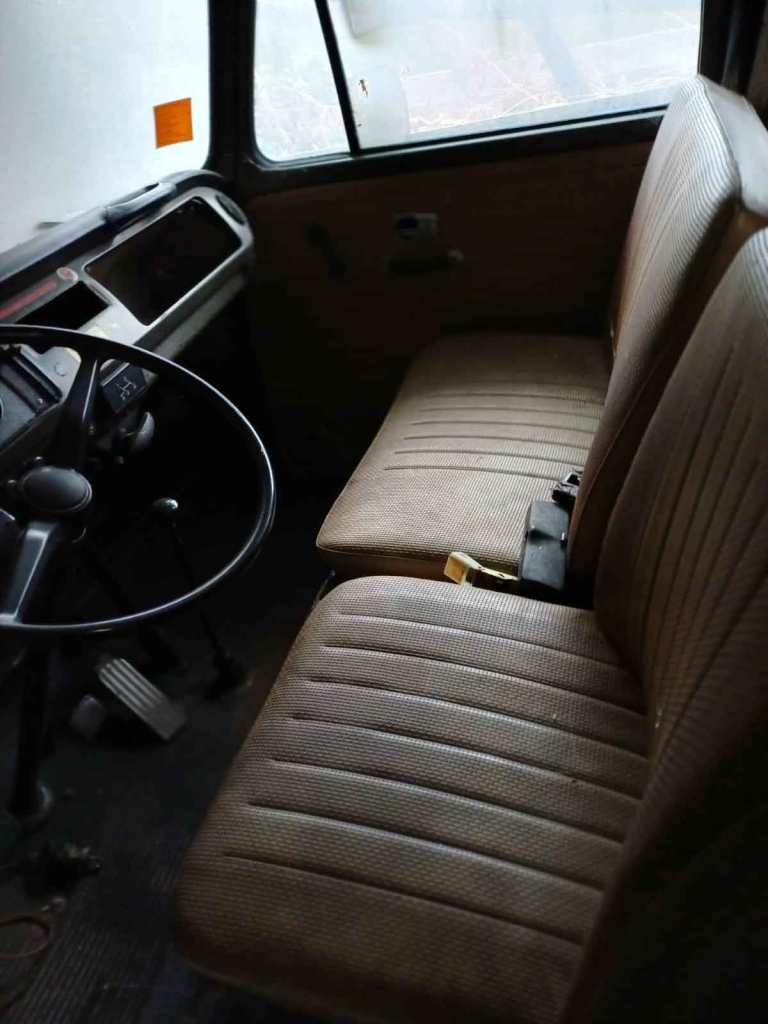
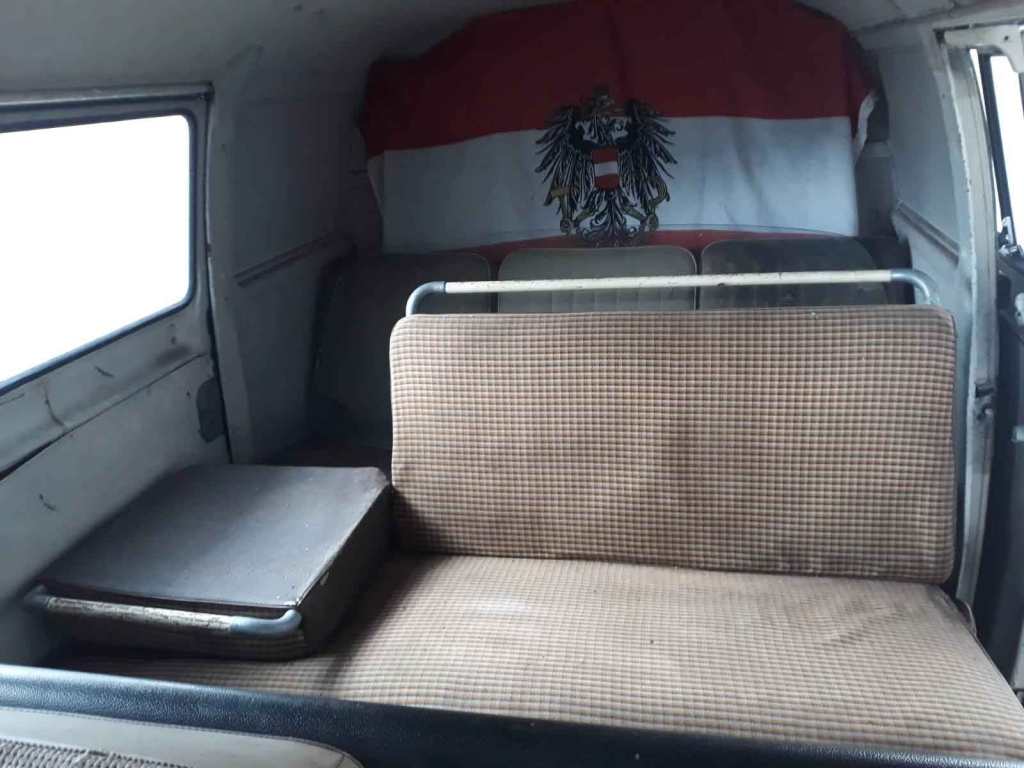
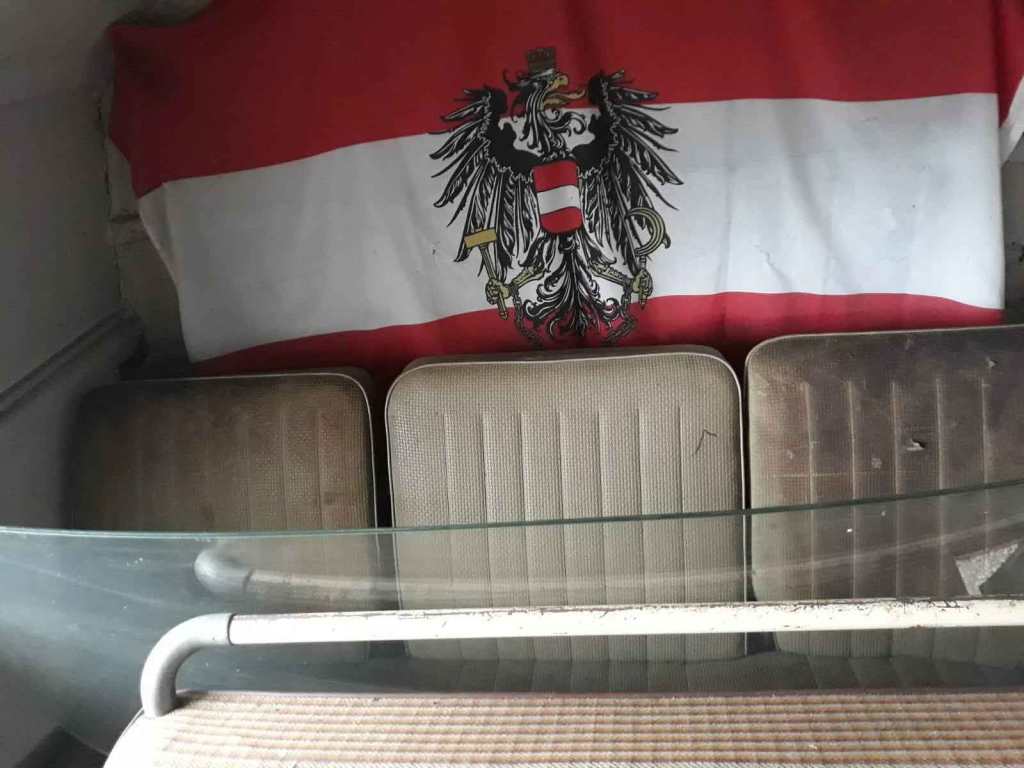
A few key facts about the bus:
Volkswagen T2a – Type 23 Kombi
Production date: November 22nd, 1968
First registration: January 1969
Model year: 1969
Seats: 9
Power: 50 hp
First delivery: Salzburg, Austria
First owner: Austrian Federal Ministry of Defence (Austrian Army)
Previous owners: 5
Special features:
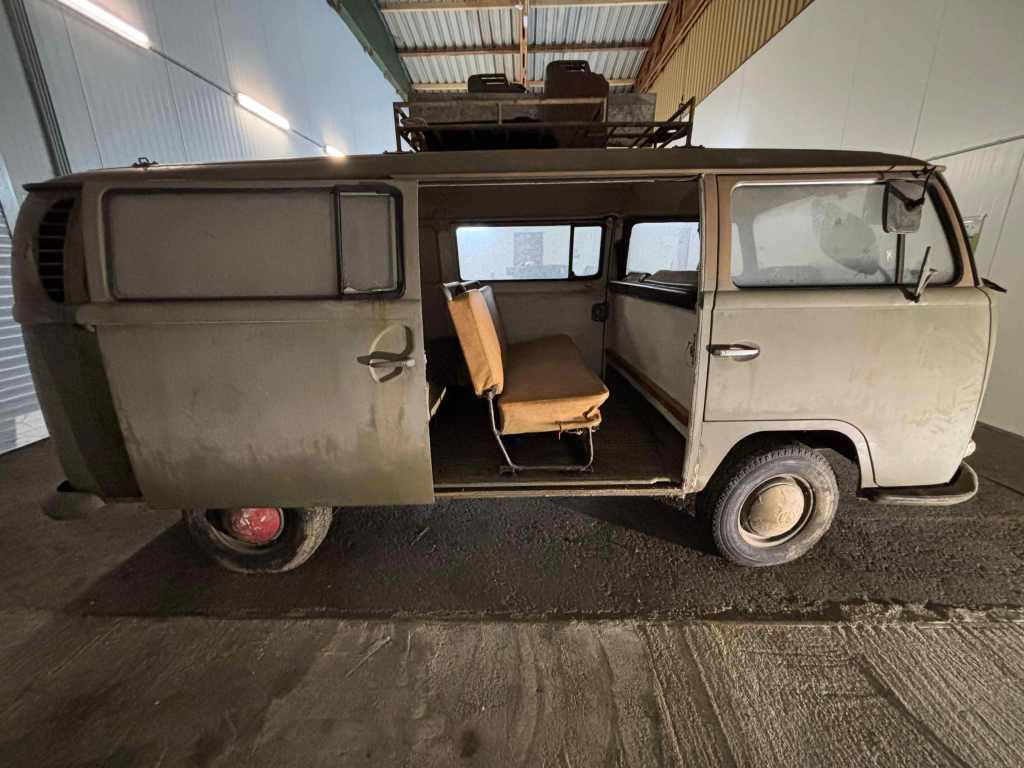
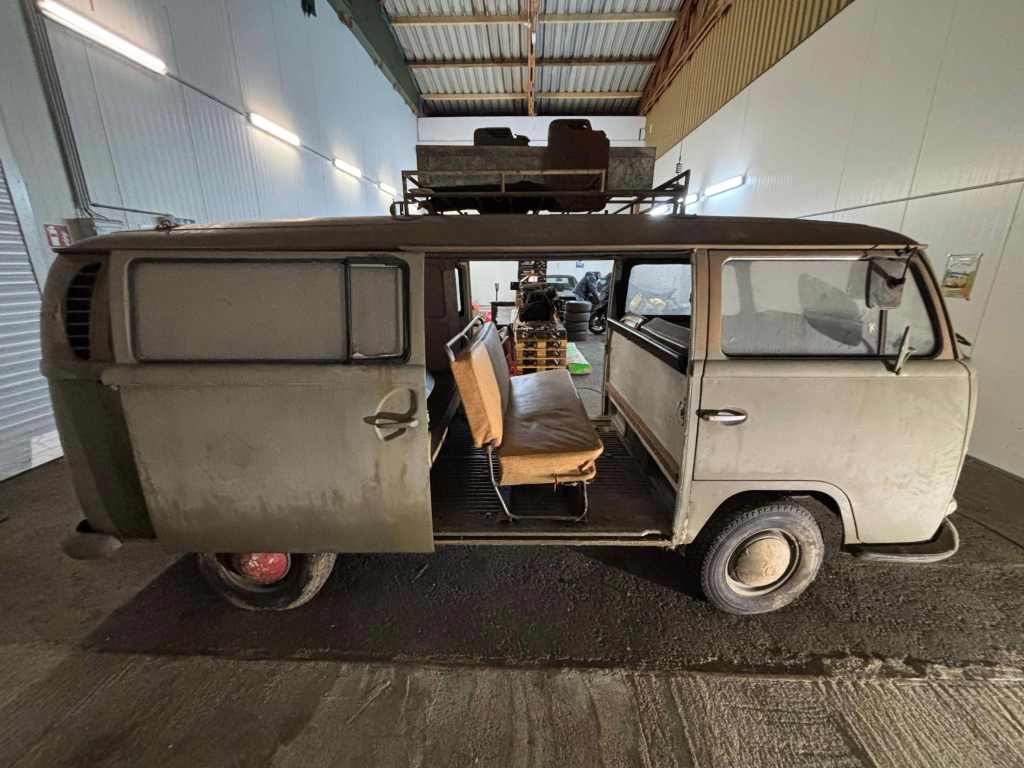
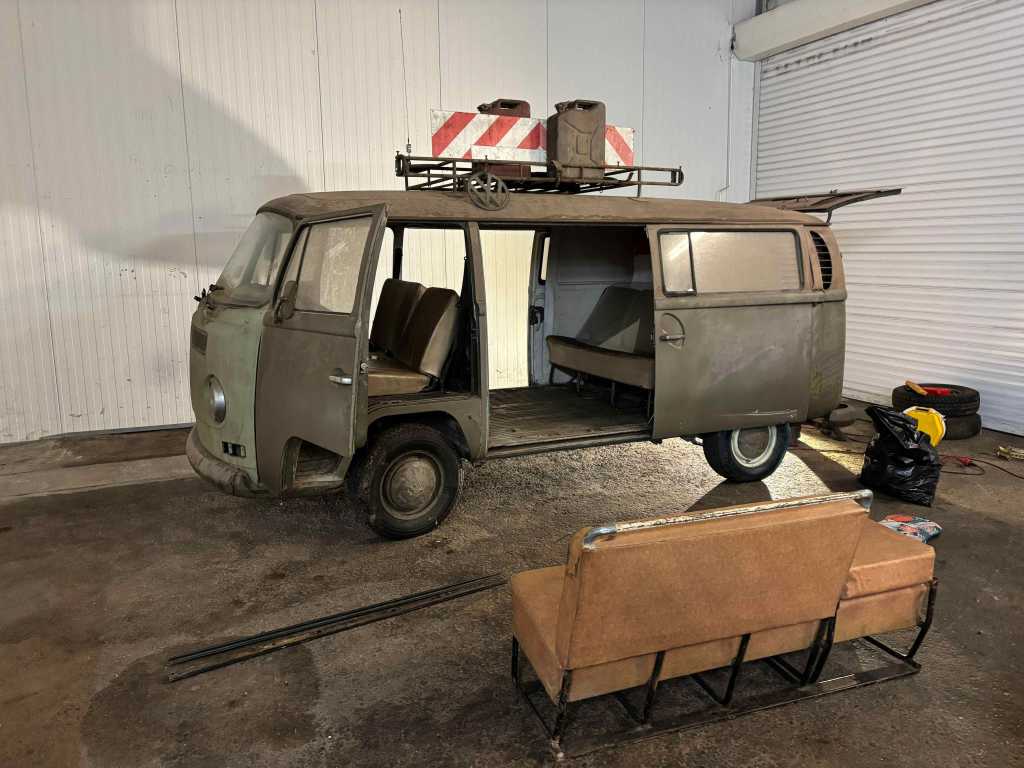
- Sliding doors on both sides
- Rear lid without window
- Towing hooks front and rear
- Color-matched body parts such as door handles (not chrome-plated)
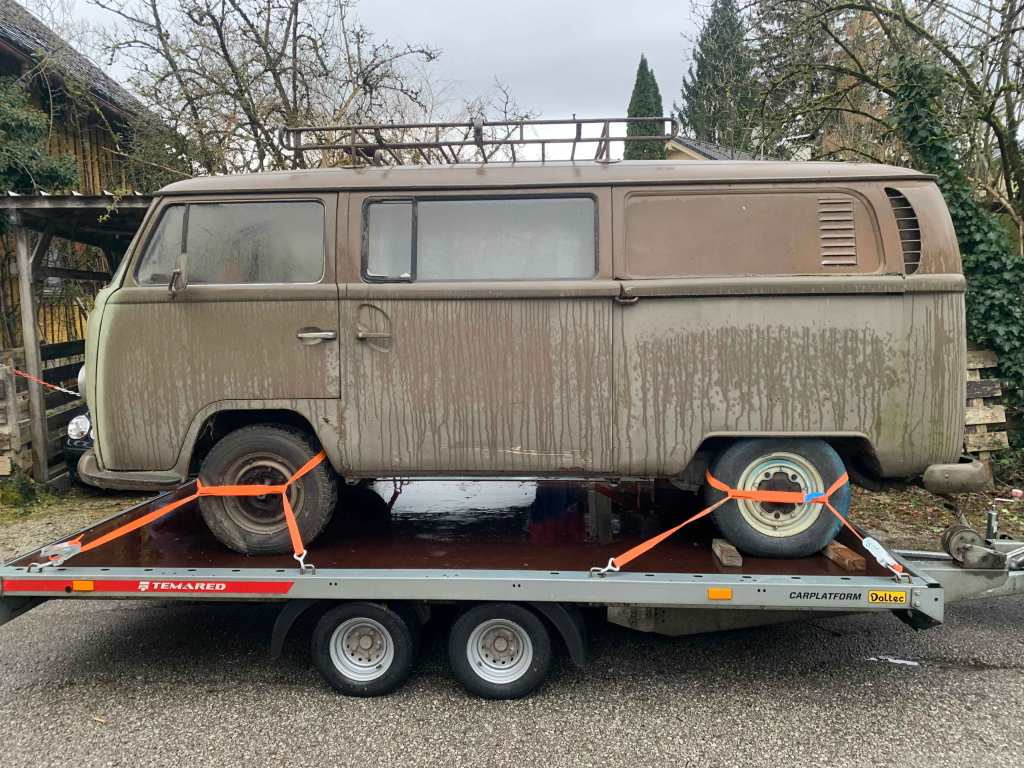
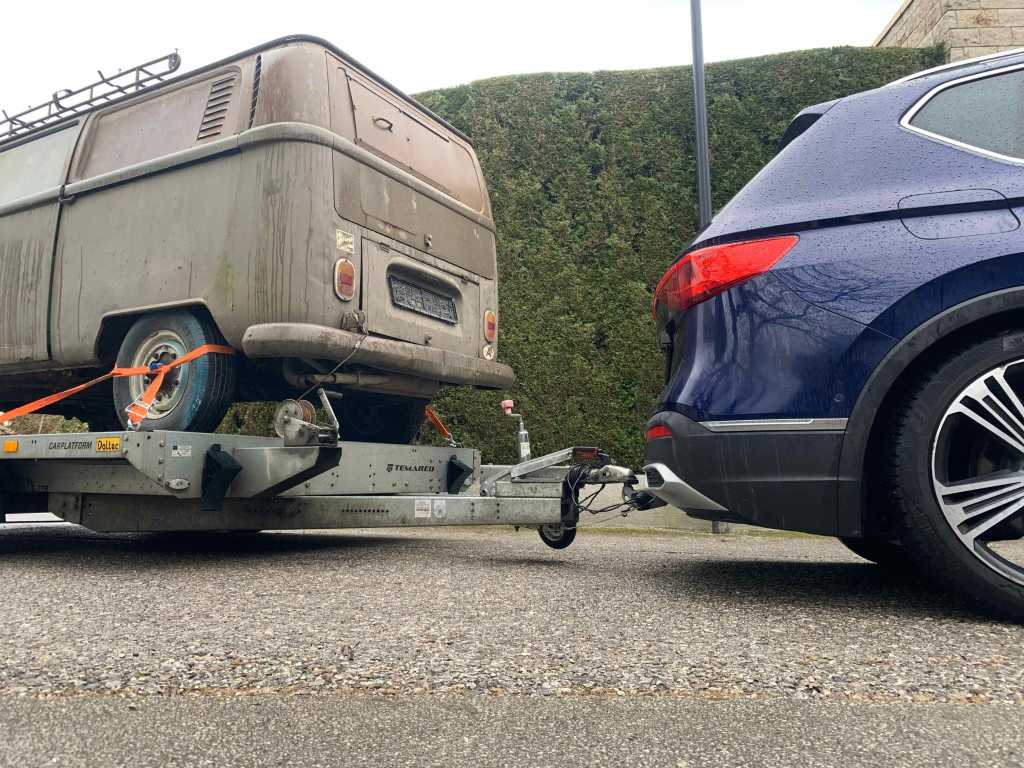
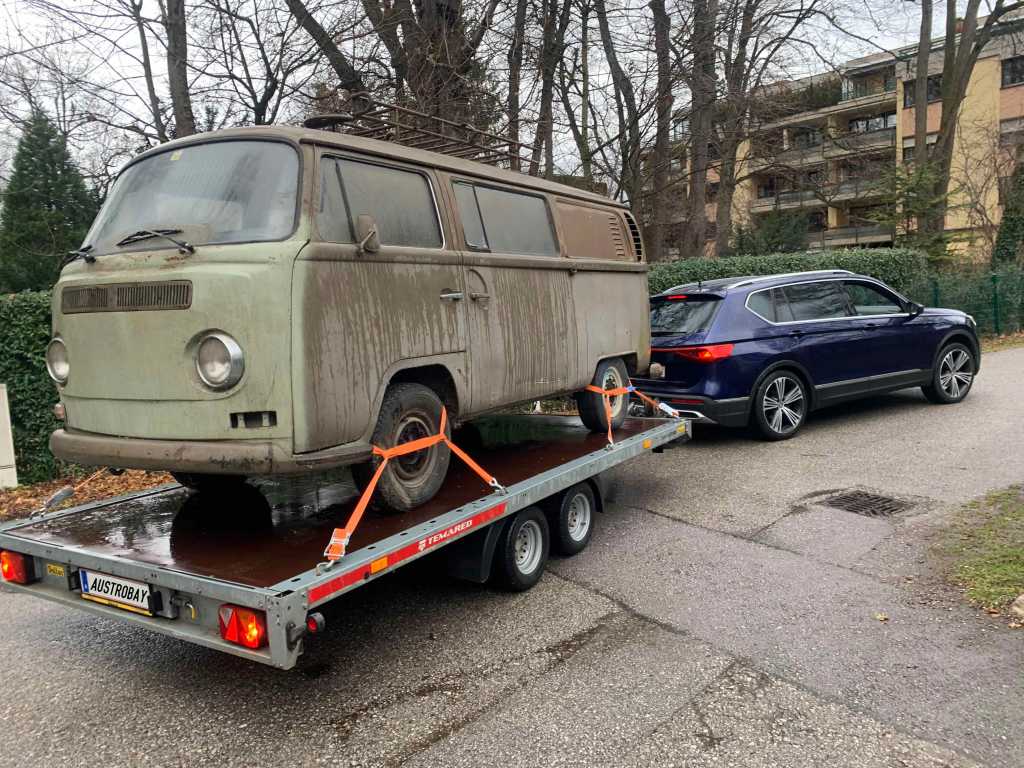
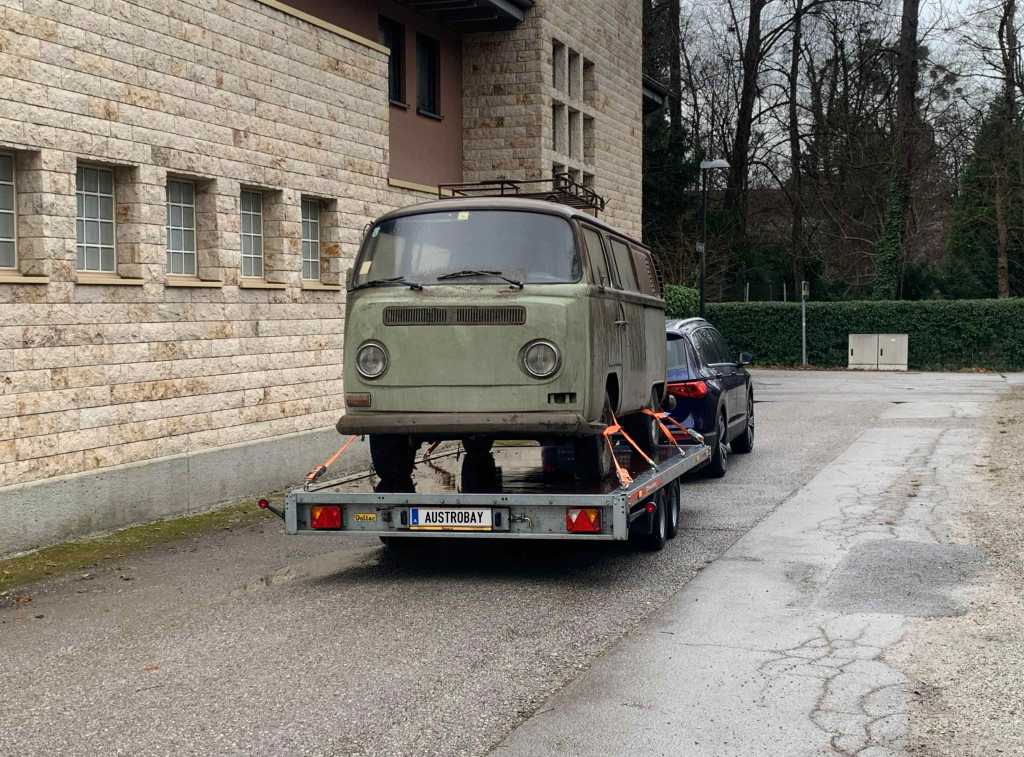
Just five days after the ad went online, so practically the very next weekend, we drove to Salzburg to buy the bus.
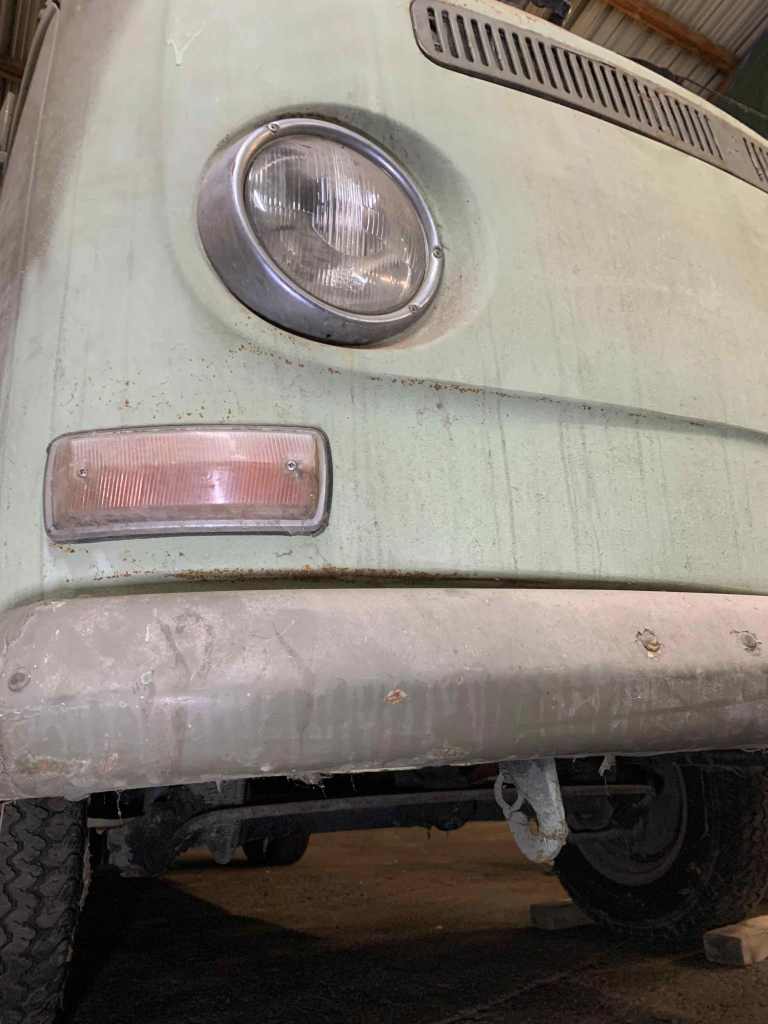
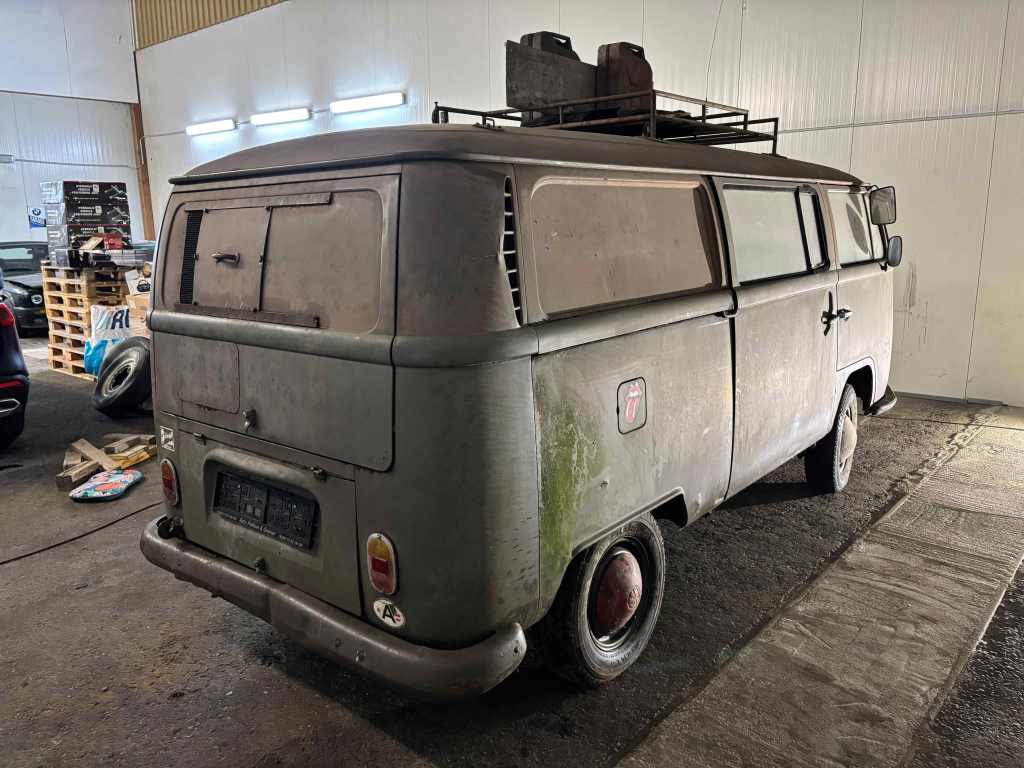
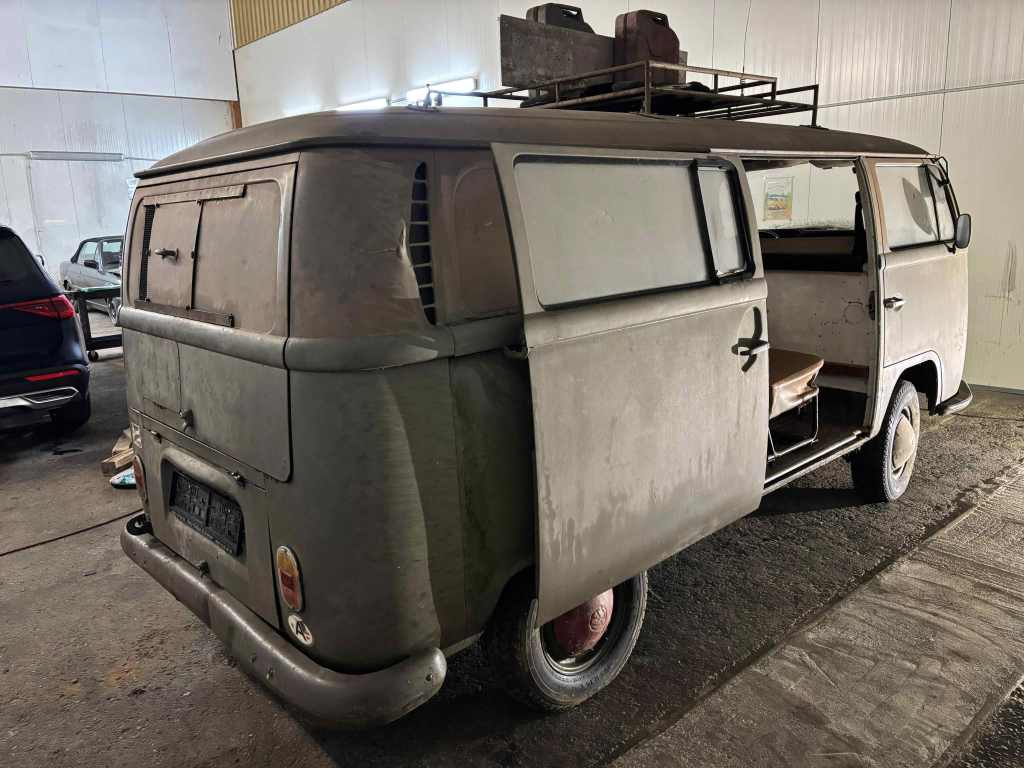
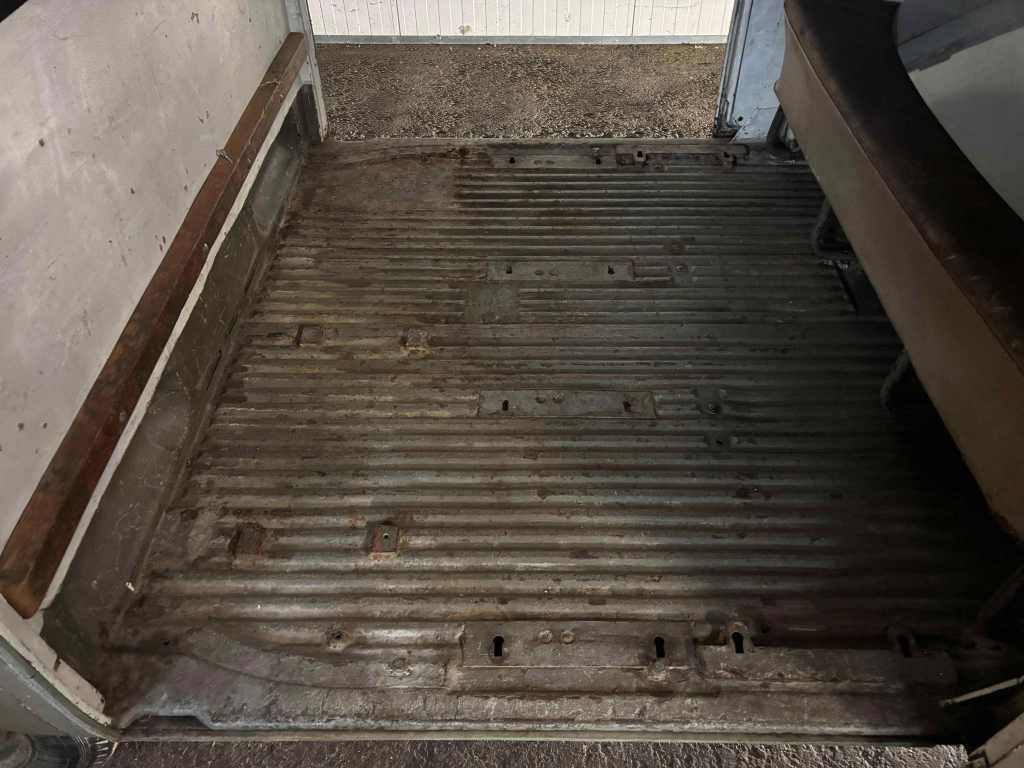
Over the years, the bus received several different paint jobs while in the Austrian Army, but it has relatively little rust for an Austrian bus that has been parked in a front garden under a carport since 2007 (in running condition).
Generally speaking, the bus was decommissioned from the army in 1985 and has had four civilian owners since then. The last two registered owners were two friends who shared the bus from 2000 to 2007. The T2a was delivered to Salzburg – and all four subsequent private owners also lived in the Salzburg area. I still need to find out which barracks the bus actually served at.
One thing that’s still unclear to me:
There’s no indication on the M-plate that the rear side windows were closed. An M-code is present, which is unknown and could not be deciphered: M304. No information about it can be found online. Therefore, it is currently unclear whether the side windows were closed by VW or added later by the military. However, I tend to think it was added later.
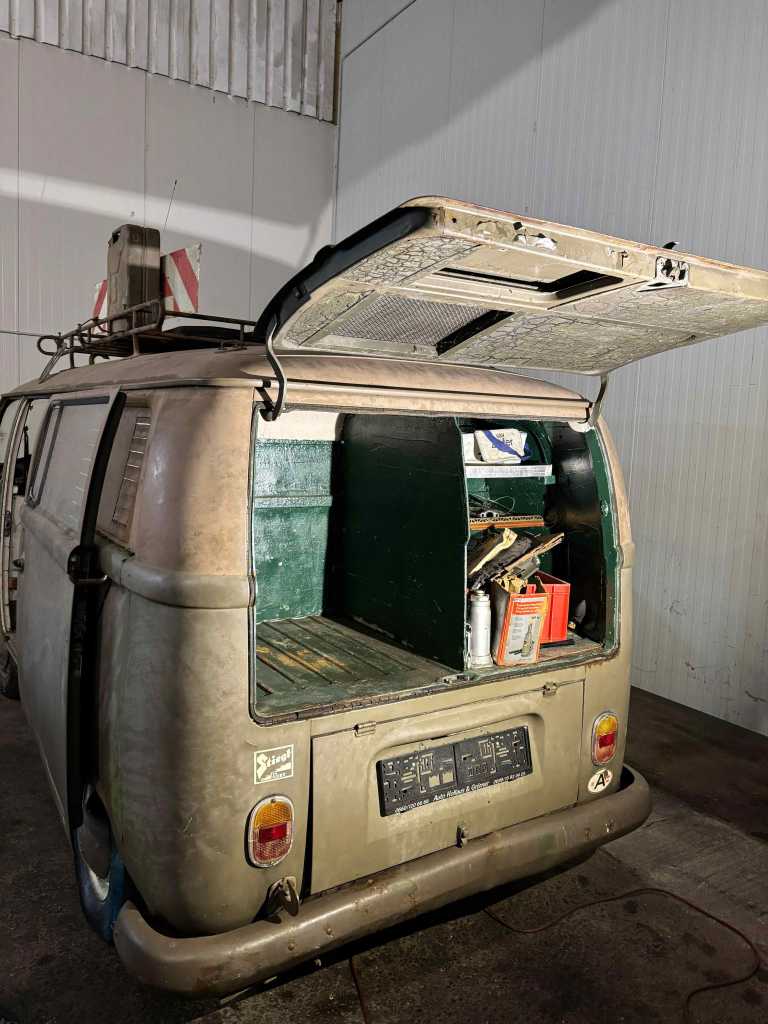
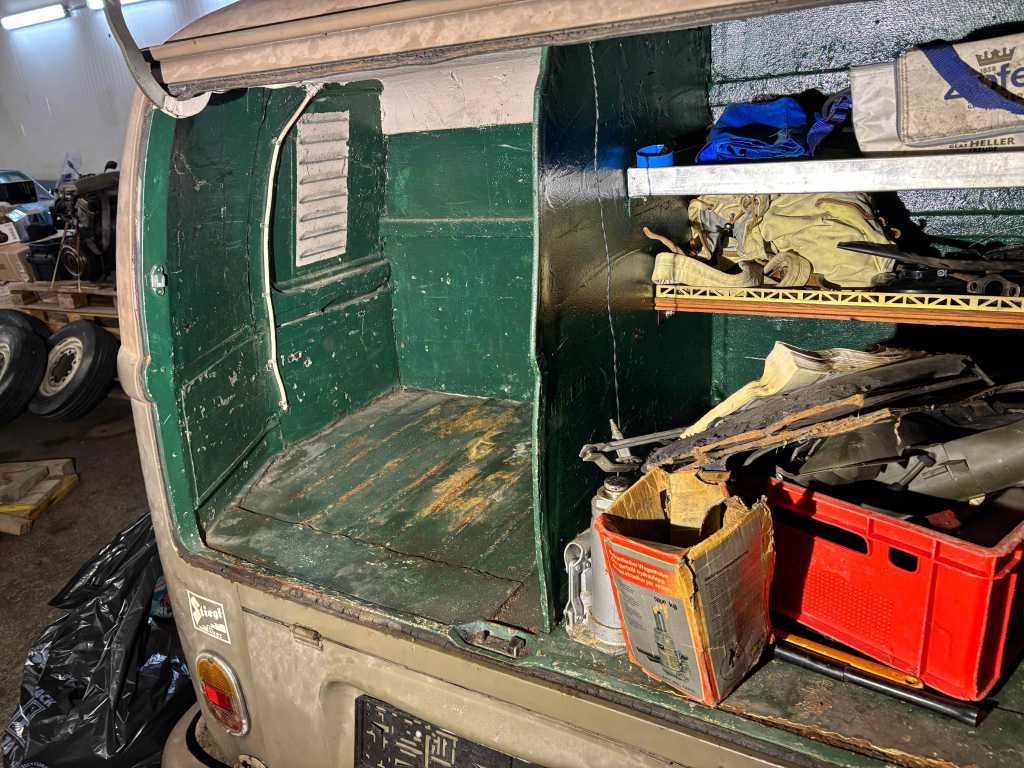
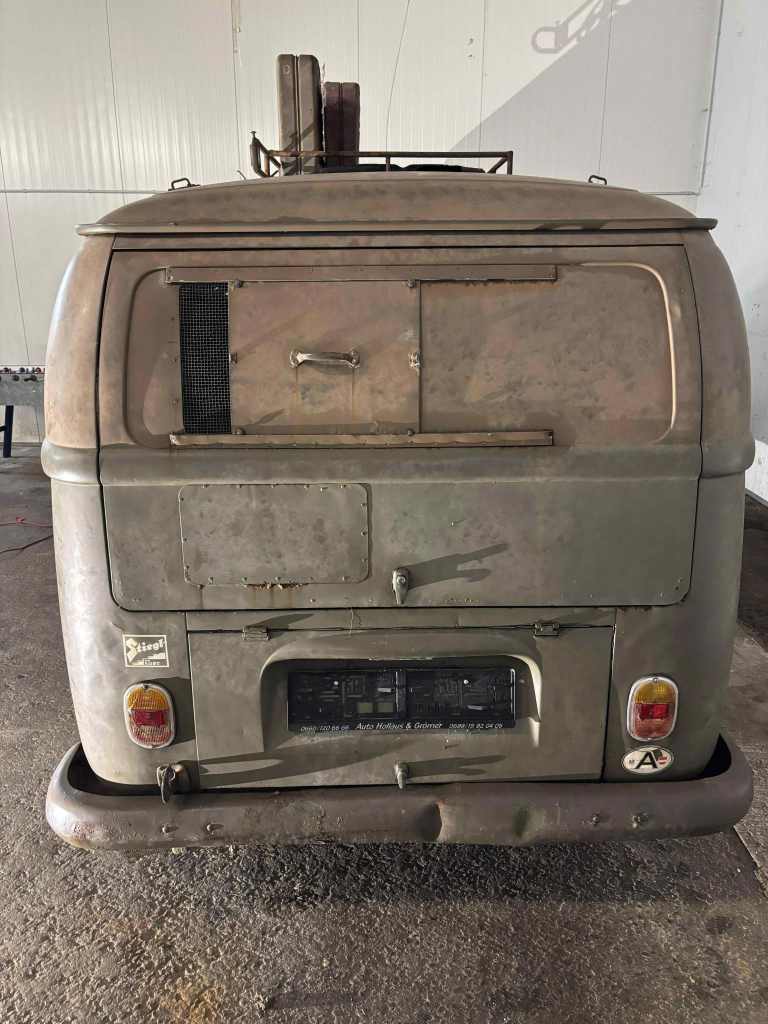
Presumably, a generator or something similar was installed in the rear. This would explain the side ventilation slots in the closed driver’s side window – or indeed the sliding window with a grille on the tailgate.
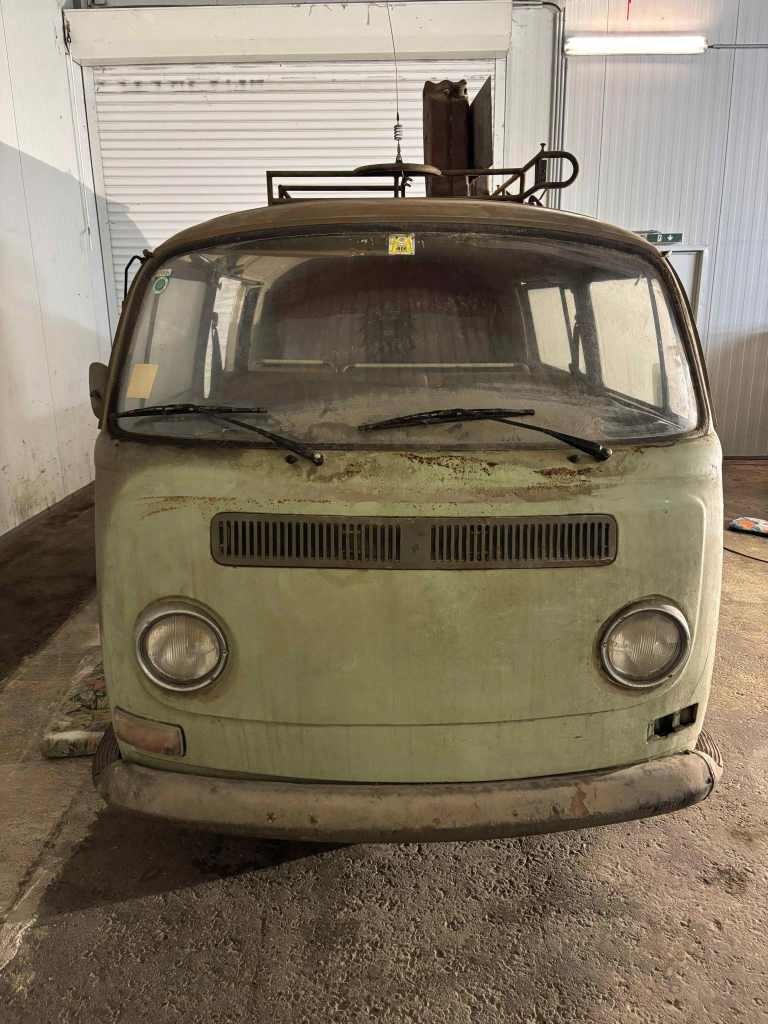
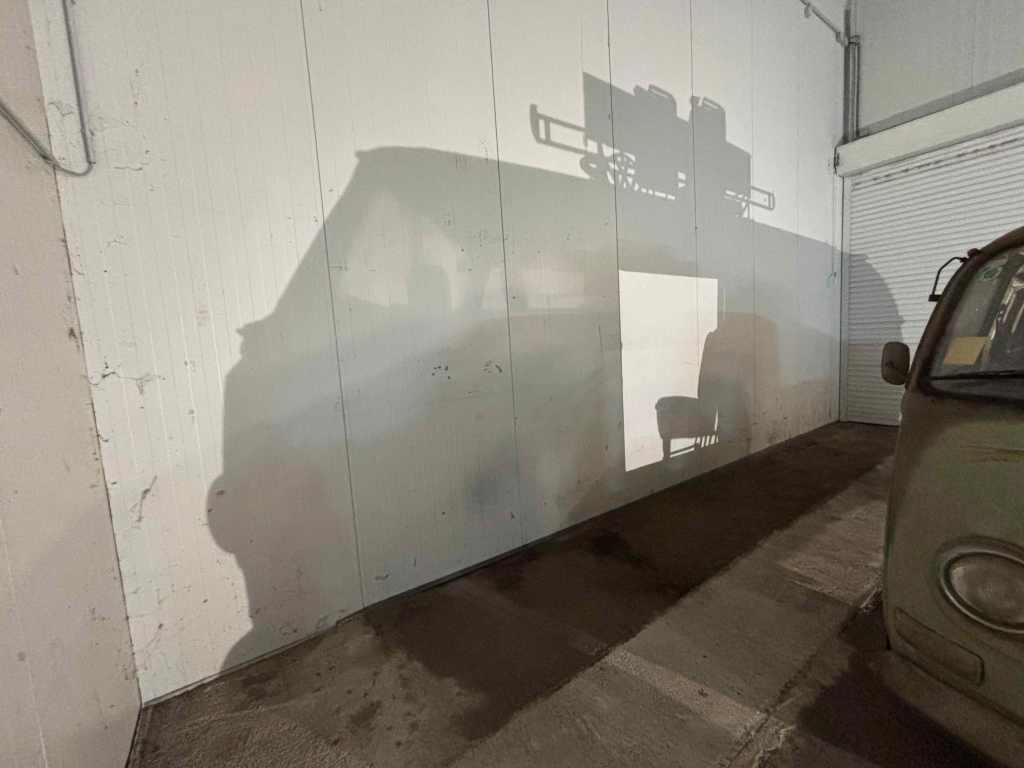
A permanently welded roof rack with a small antenna and various eyelets are still present on the roof, as are two ventilation pipes.
But what pleased me most was that the original middle row of seats was still there. This would probably not have been easy to find, since a bus with sliding doors on both sides also needs a bench seat where the two outer backrests can be folded down. Strangely, this particular bench seat was not in the middle of the bus, but in the rearmost, third row. In the second position, however, there was another bench seat in the bus, but it was considerably older. It was from a T1 Split bus, but with rails welded on for a T3 vanagon. Very interesting!
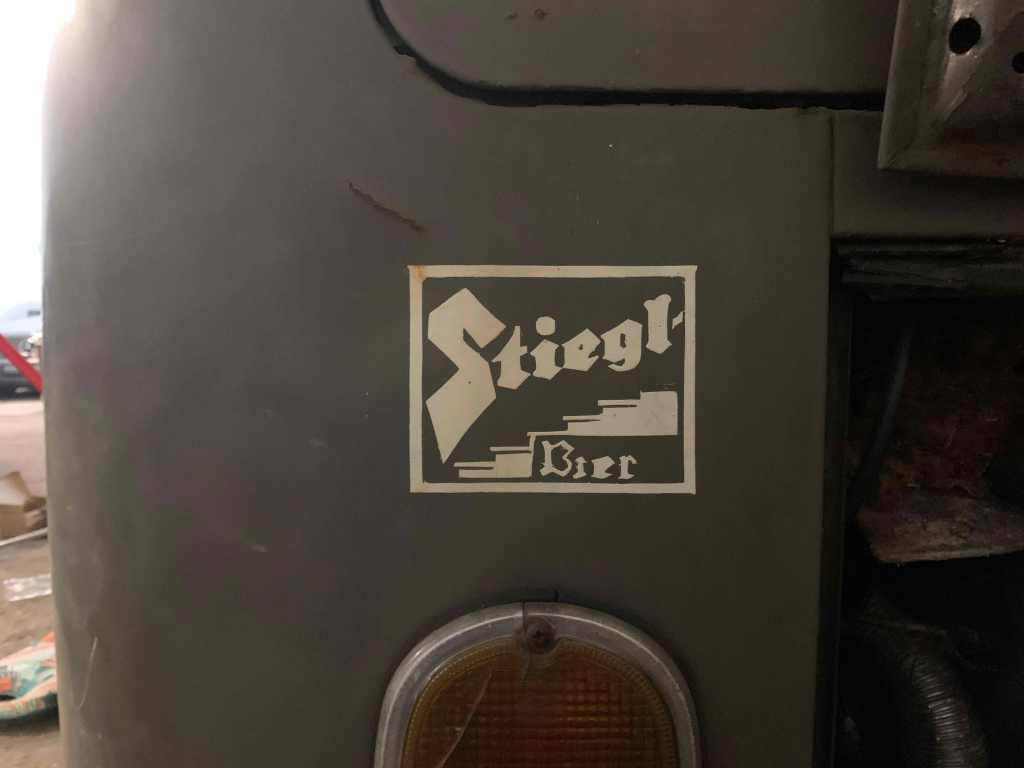
Unfortunately, the tactical markings had already been painted over. This was the case both on the front, where, after a minor fender bender, the nearest available color had simply been sprayed on, and on the rear, where a previous owner had hand-drawn the Stiegl beer logo instead of the army unit insignia. Incidentally, this very brewery was located just a few hundred meters away, from where the bus had been parked for many years in Salzburg.
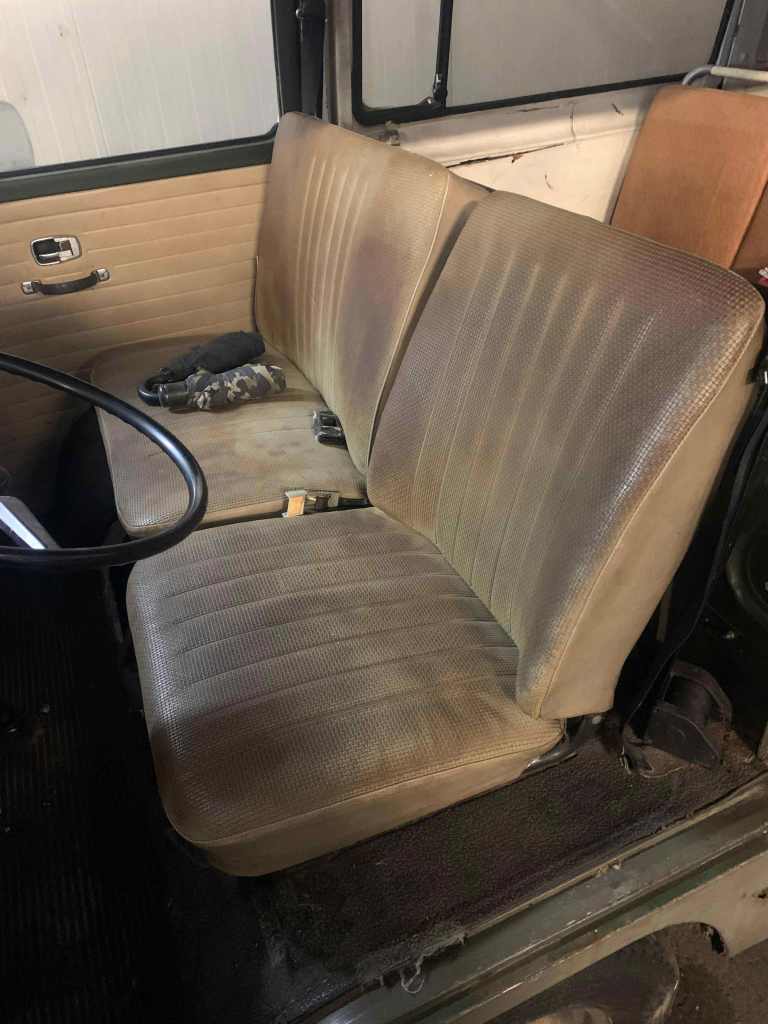
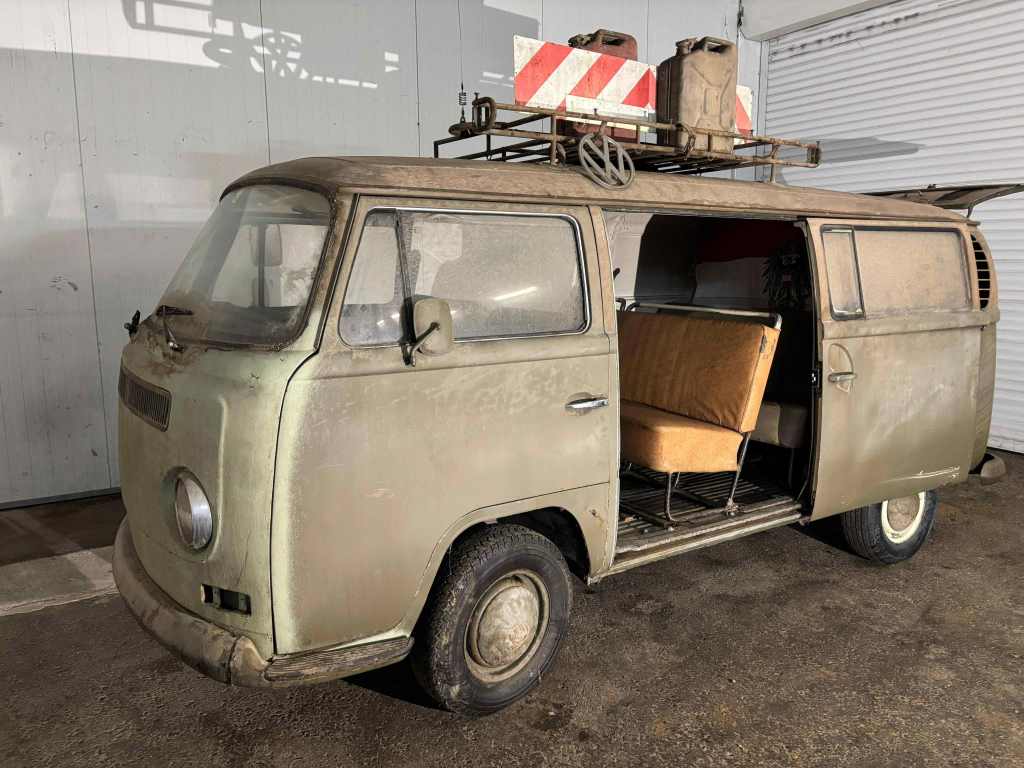
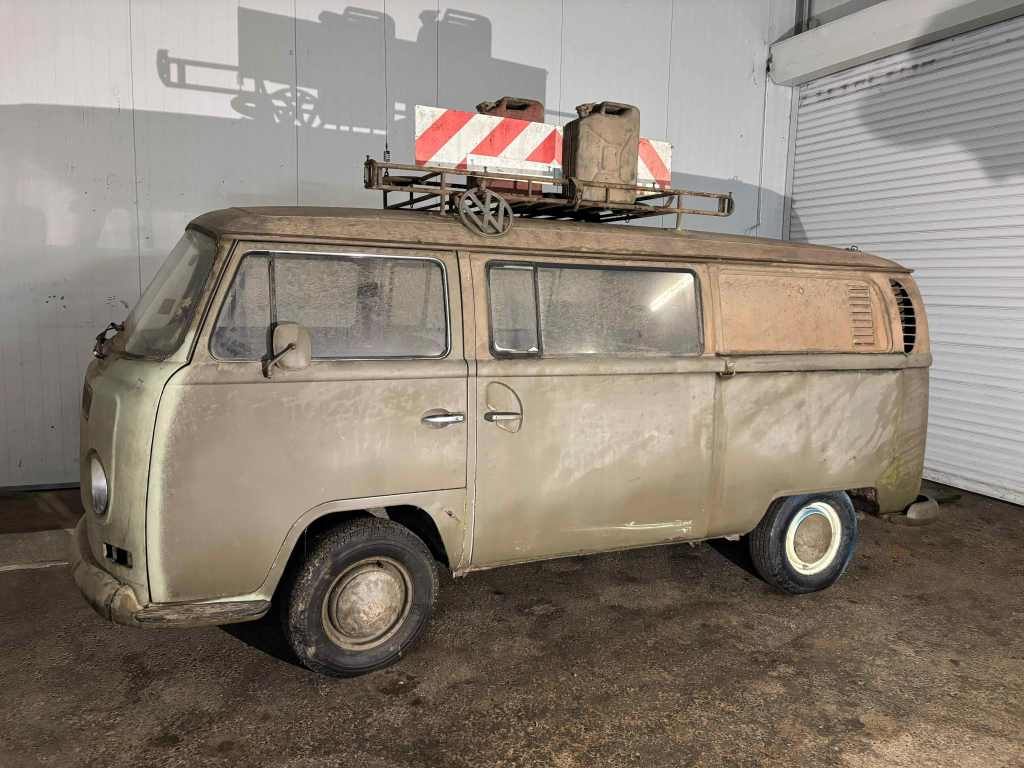
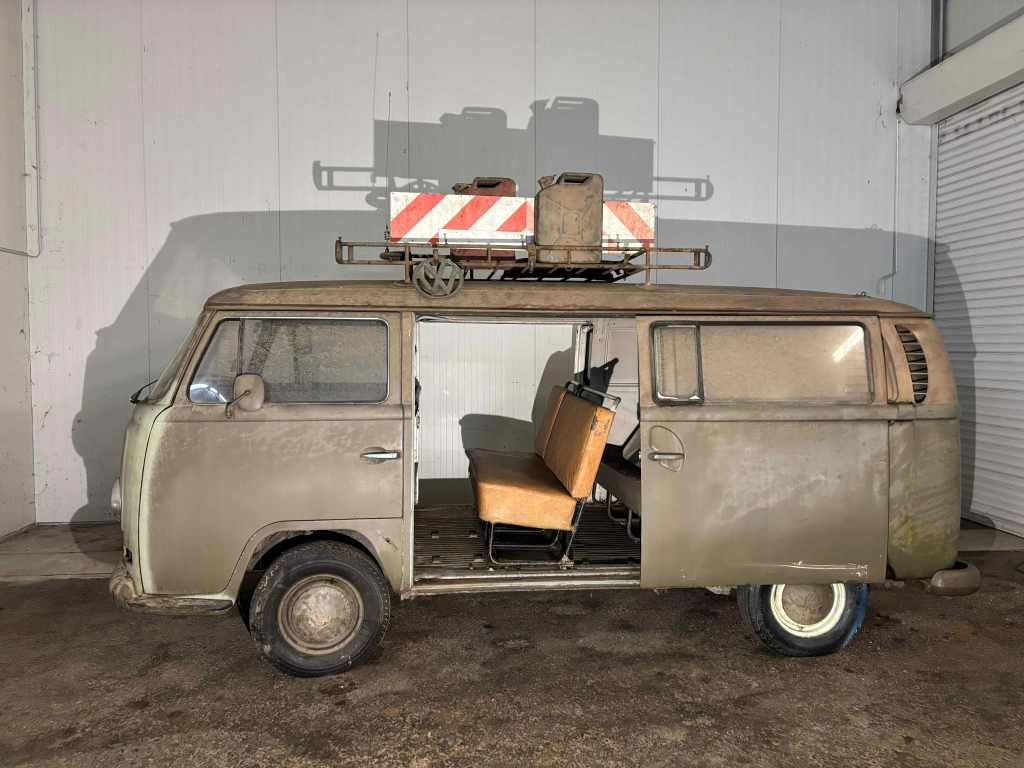
Of course, I started doing some research relatively soon after buying the bus – even before I’d purchased it.
I was particularly interested in whether there were any other buses like it. And indeed – a guy who lives just an hour away has an exactly identical bus. His bus’s chassis number is only 10 digits older, and it had the same license plate number – just one digit shorter than mine – when he was in the Austrian Armed Forces.
As I continued searching through my VW bus groups, forums, and networks, I came across another T2a, exactly the same model, which was also produced on the same day and has the exact same features. This vehicle is now in United Kingdom, and I’m already in contact with the owner.
It seems there are at least three more such buses, produced on the same day and equipped with the same features. At least, that’s what the data from analyzed M-Plate on a website suggests.
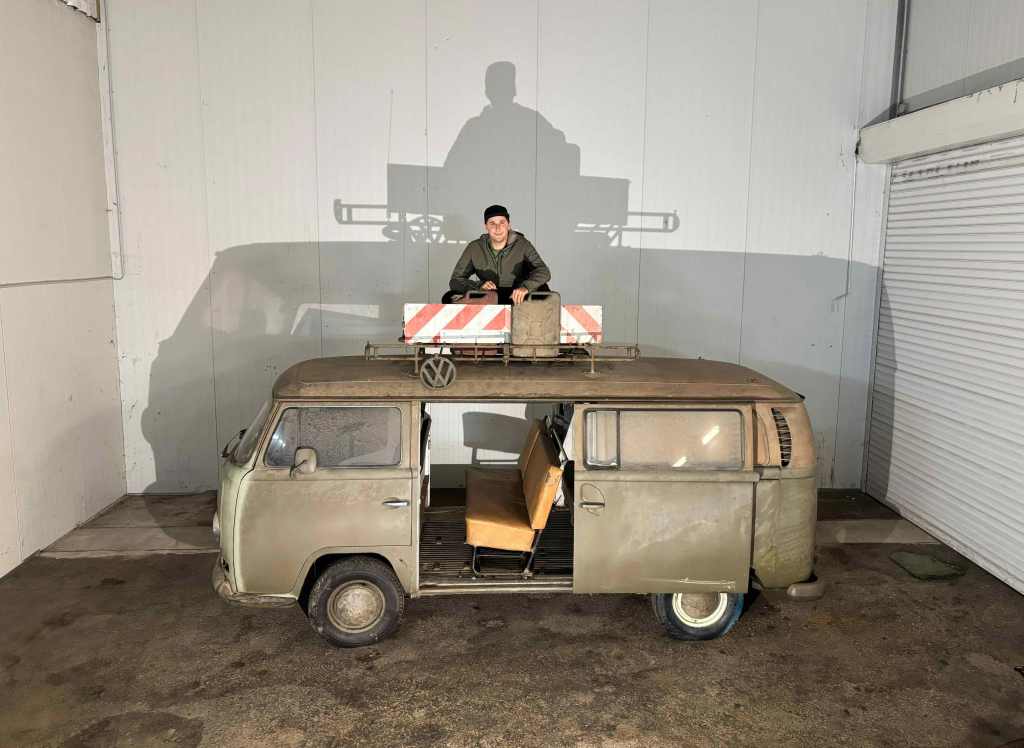
I’m really looking forward to dedicating myself to this project and getting the bus running again – while preserving its original look.
Given the VW bus’s special history, I’ve decided to name it „Ernst“. Because in german language, Ernst is not only a real name, but also an adjective that literally means „serious“. In addition the initial letter also goes well with our T1 „Eve“ from California.
And while I’m at it, many thanks to Bernhard, who helped me pick up the T2 from Salzburg.
As usual, I’ll post updates about Ernst here in the blog section! 🙂
Next blog ⇒
